Studio Of The Month - Flexible Response
Recording Studios
(IM Jul 85)


Magazine Archive
Home -> Magazines -> Issues -> Articles in this issue -> View
Article Group: | |
Studio Of The Month | |
Sarm WestArticle from International Musician & Recording World, August 1985 | |
Report by Curtis Schwartz.

Hidden away behind Portobello Rd and the confused hubbub of London's Notting Hill Gate, is the location for one of Britain's foremost recording studios — Sarm West.
Whilst some studios are famous for perhaps great monitoring, a superb sounding live room or an ideal situation Sarm West's reputation is much more fundamental as above all else it's reputation is for 'hits' — Sarm's studio diary could easily be mistaken for a Who's-Who guide to hit making bands of today — Tears For Fears, ABC, Frankie, Kajagoogoo, Wham!, Go West, The Art Of Noise, Yes, Asia, Elvis Costello, Brian Ferry, Nik Kershaw...
Sarm West is situated on the site of the old Island Records Basing St Studio (previously a church), and now consists of three studios — all with Solid State Logic mixing desks, facility for 24 or 48-track digital or analogue operation. The main difference between them is the sizes of their studio areas.
Studio One is the largest of the three, with one large 1200 sq ft studio area which has accommodated an orchestra of more than 40 musicians in the past, and it also has three recently completed isolation booths — all acoustically treated for different and lively acoustics. One booth has its walls and ceiling covered with blue mosaic tiling for a very bright ambience, similar to a swimming pool's acoustics.
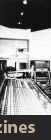
Inside Studio One's spacious control room sits the obligatory SSL 6000E 32/48 channel desk with full computer, total recall and events controller. The 24-track machines are a Studer A80 MkII, and a Studer A800 MkIII, which are synced via a new Adam Smith synchroniser. This links to the SSL desk, so that the desk controls both machines at the same time (rather than first controlling machine A, which then would in turn control machine B). The machines themselves are isolated in their own air conditioned booth which also holds other pieces of equipment such as the power amps and power supplies, etc. Consequently the control room is exceptionally quiet and free of the normal humming from the machinery.
Studio One's monitoring is via customised Eastlakes, AR18s and Auratones, and mixdown machines are an Ampex ATR100 2/4 track ½" machine and a Studer B62 2 track ¼" machine.
The studio's outboard gear is comprehensive to say the least, with reverb being supplied by Lexicon's 224XL digital reverb with Larc and new software, EMT's 251 digital reverb, EMT 140 and 240 echo plates and foils. Digital delay is from Lexicon's Super Prime Time and Prime Time II, AMS's DMX15-80S stereo DDL with harmoniser cards and keyboard interface, and other effects include an AMS Tape Phase simulator, various Neve and Urei compressor/limiters, (in addition to the compressors and noise gates found on every channel of the SSL desk of course!), Pultec and Urei EQ, Bel and Eventide flangers plus a Scamp rack and two Dolby 361 units.
Studio Two's control room is a little smaller than Studio One, yet the equipment is similar — SSL's 4000E 40/48 channel desk with full computer, total recall and events controller; the same A80 and A800 24 track machines and ATR100 and B62 mixdown machines; and the same refreshing eggshell-blue interior decor which runs right throughout the Sarm complex.
There are also many similarities in outboard gear between studios One and Two — Lexicon 224, EMT plates, AMS delays etc.
Studio Two, however, uses Sean Davies LS821 monitors; which, unlike Studio One's glorified PA bins, are perhaps a little more for the purist engineers.
The studio area of Studio Two is much smaller than Studio One's, measuring 600ft2. In Studio Two is one of Sarm's two grand pianos — a Steinway baby grand, the other one being an enormous 9'6" Bosendorfer Imperial Grand (previously owned by Oscar Peterson) which lives in Studio One (the piano — not Oscar Peterson).
Studio Three, designed for the infamous Trevor Horn, is the most recent addition to the Sarm West complex, and is the only area in the building which is not painted blue. Its walls are all black and covered with strange luminous shapes, all of which is covered by a black grille — very high-tech.
In front of the SSL desk are two TV monitors, which are routed to the two video sockets on each of the 12 wall boxes located around the room. They can then display any video signals — from an Emu II, the SSL desk or conventional video applications. Incidentally, in addition to having eight jack and cannon inputs to the desk, these wall boxes also have MIDI tie lines and SMPTE code outputs from the desk.
Studio Three uses Sony's 24-track digital machine, which can be wheeled (by no less than six men) into the other two studios for digital sessions.
Three's outboard gear comprises both a Lexicon 224X, 200 and Quantec digital reverbs, Lexicon, AMS and Roland delays, Eventide harmoniser and dbx compressors. Monitoring is by Quested which is driven by no less than 1½K of wattage. Although Studio Three is not small, it is somewhat cosier than Studio One and Two's control rooms, and is designed with the outboard effects both to one side of the desk as well as being strategically placed above it.
With top engineers such as Nick Froome always at hand, the ZTT record company on the first floor, and some of the finest recording equipment in the world in its three recording studios, Sarm West might be the closest thing yet to a Hit Factory. At £1800/day for 48 track recording in Studio One and a bargain £1500/day for 48-track in Studios Two or Three, the hits don't come cheap. But in this case state of the art must surely reflect state of the bank account.
SARM STUDIOS (WEST) (Contact Details)
More with this topic
 |
 What's In Studio Four? |
 Studio Diary |
 The Computer & The Sound House - BBC Radiophonic Workshop |
 Speaker's Corner - CHOOSING & USING: studio monitoring |
 New Lords Of The Manor - Studio: Great Linford Manor |
 The Ultimate Garage Studio - Solo Sound |
 The Rockfield Files |
 Paradise Found - Paradise Studios |
 Strawberry Cutting Room |
 Studio Diary |
 You Can Make It If You Try (Part 1) |
Browse by Topic:
Recording Studios
Publisher: International Musician & Recording World - Cover Publications Ltd, Northern & Shell Ltd.
The current copyright owner/s of this content may differ from the originally published copyright notice.
More details on copyright ownership...

International Musician - Aug 1985
Donated by: James Perrett
Recording World
Feature by Curtis Schwartz
This article features:
Sarm West
Help Support The Things You Love
mu:zines is the result of thousands of hours of effort, and will require many thousands more going forward to reach our goals of getting all this content online.
If you value this resource, you can support this project - it really helps!
Donations for September 2026
Issues donated this month: 0
New issues that have been donated or scanned for us this month.
Funds donated this month: £0.00
All donations and support are gratefully appreciated - thank you.
Magazines Needed - Can You Help?
Do you have any of these magazine issues?
If so, and you can donate, lend or scan them to help complete our archive, please get in touch via the Contribute page - thanks!
If you're enjoying the site, please consider supporting me to help build this archive...
...with a one time Donation, or a recurring Donation of just £2 a month. It really helps - thank you!

 @mu_zines
 RSS Feed
 Blog
Blog